
Yuki Higashino
Yuki Higashino
Bird and Fragments
Nov 25 – Dec 16 2025
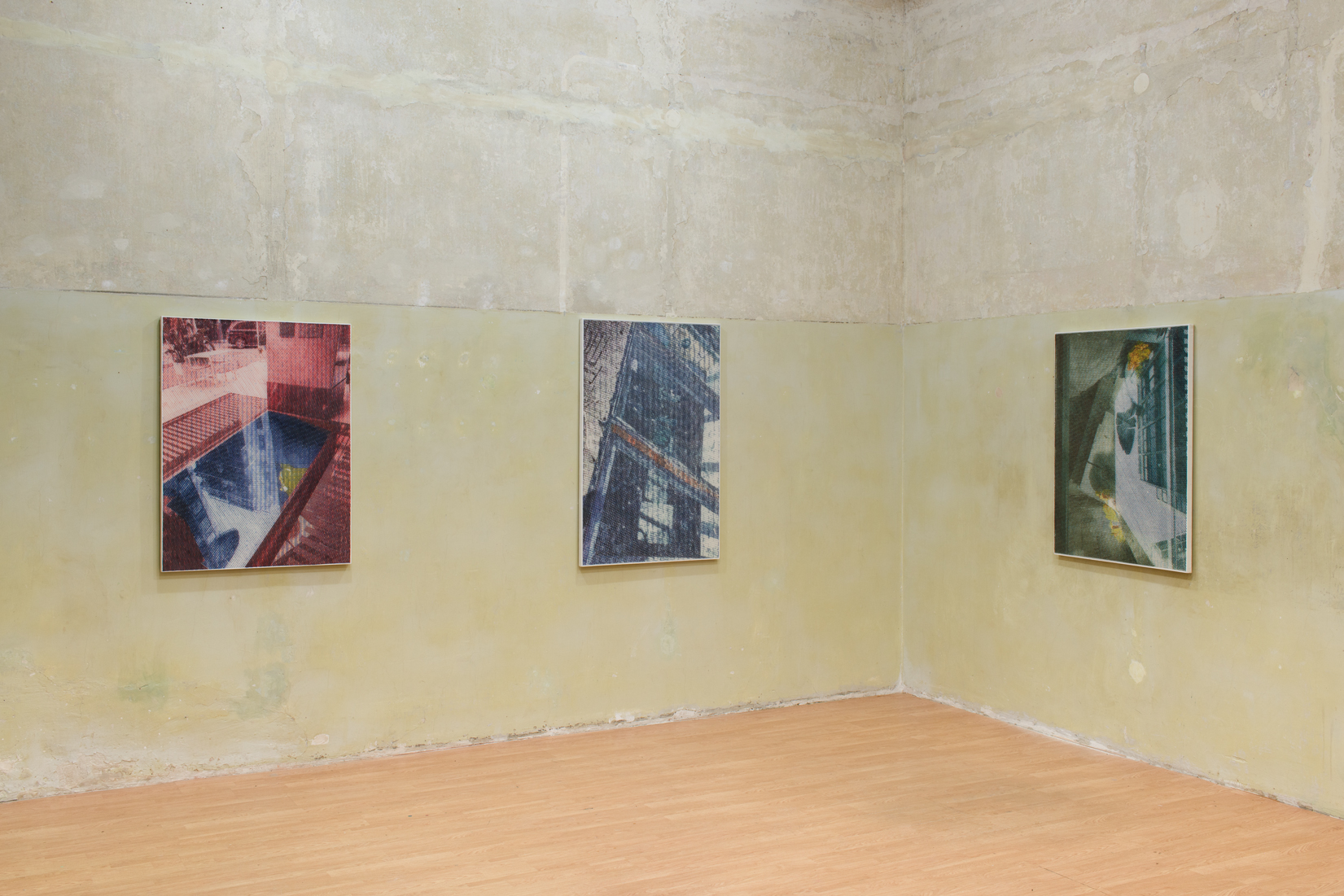
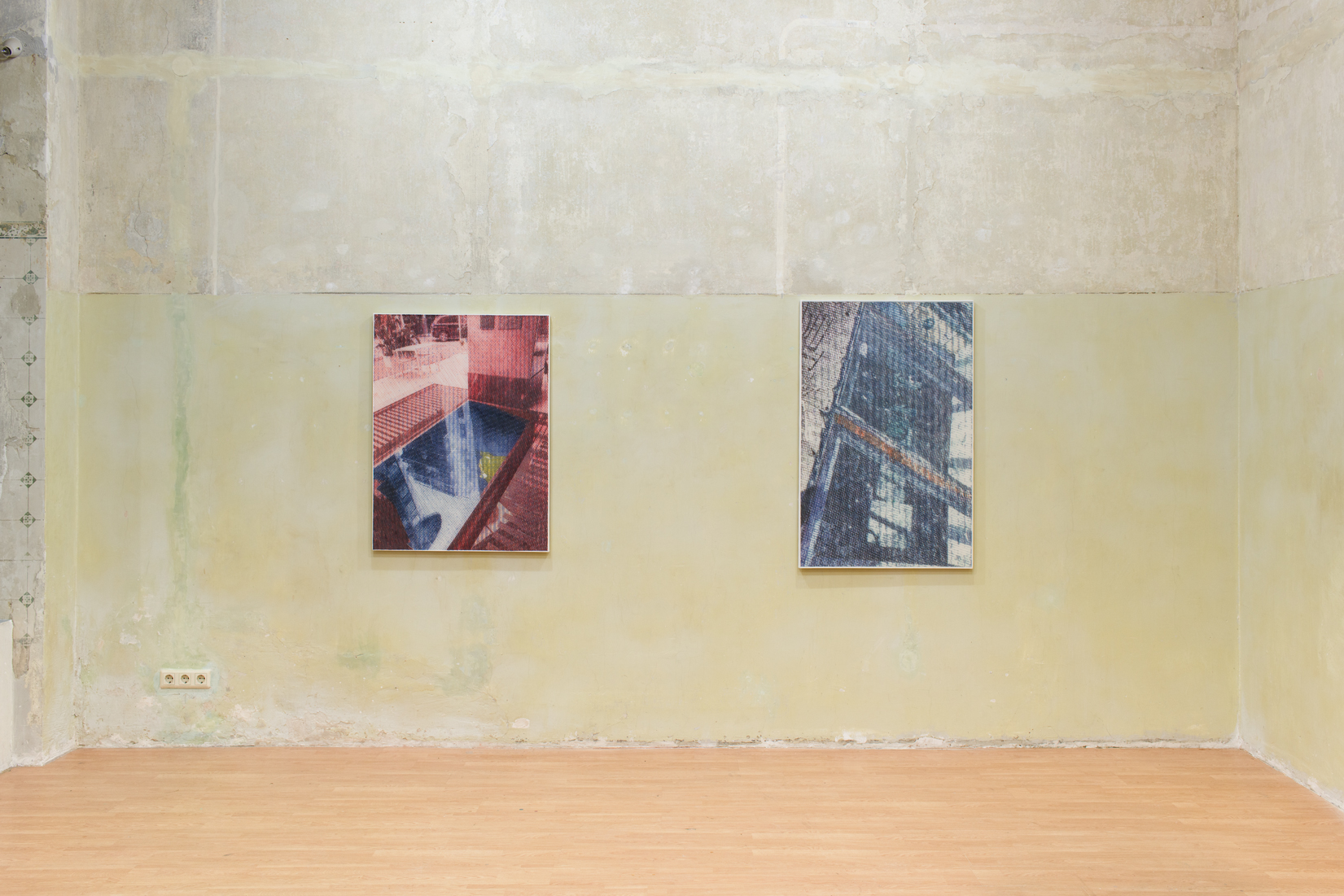
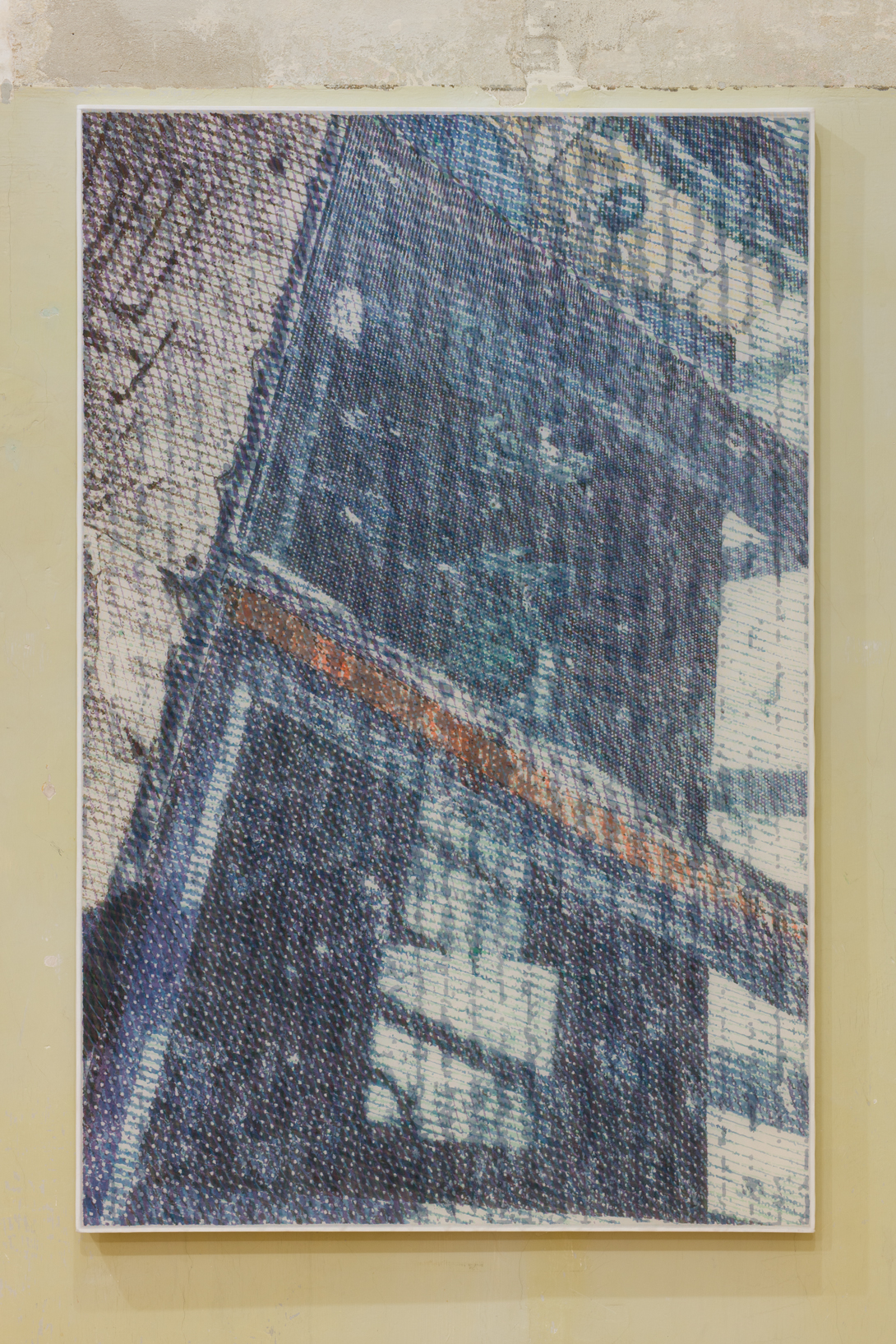
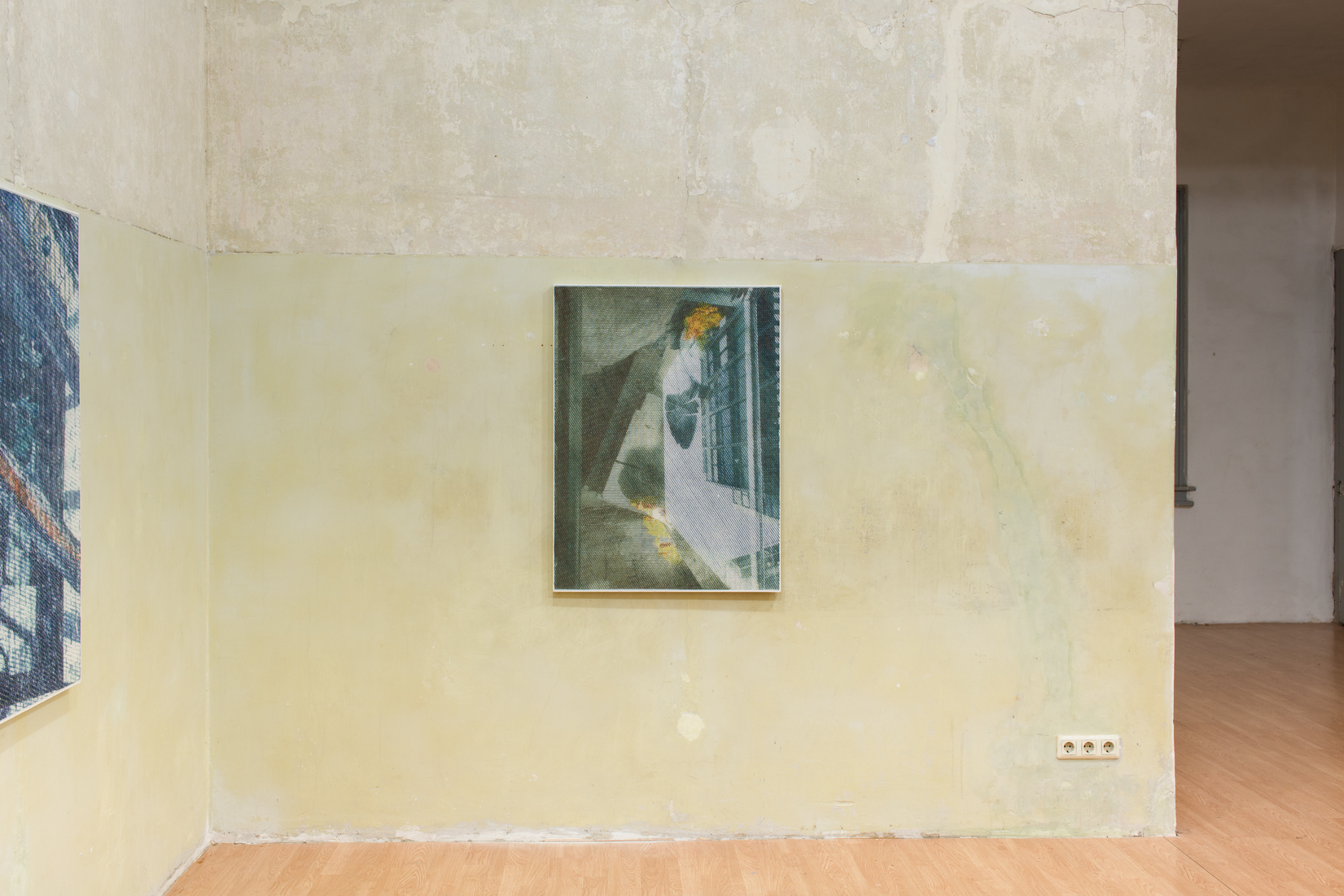
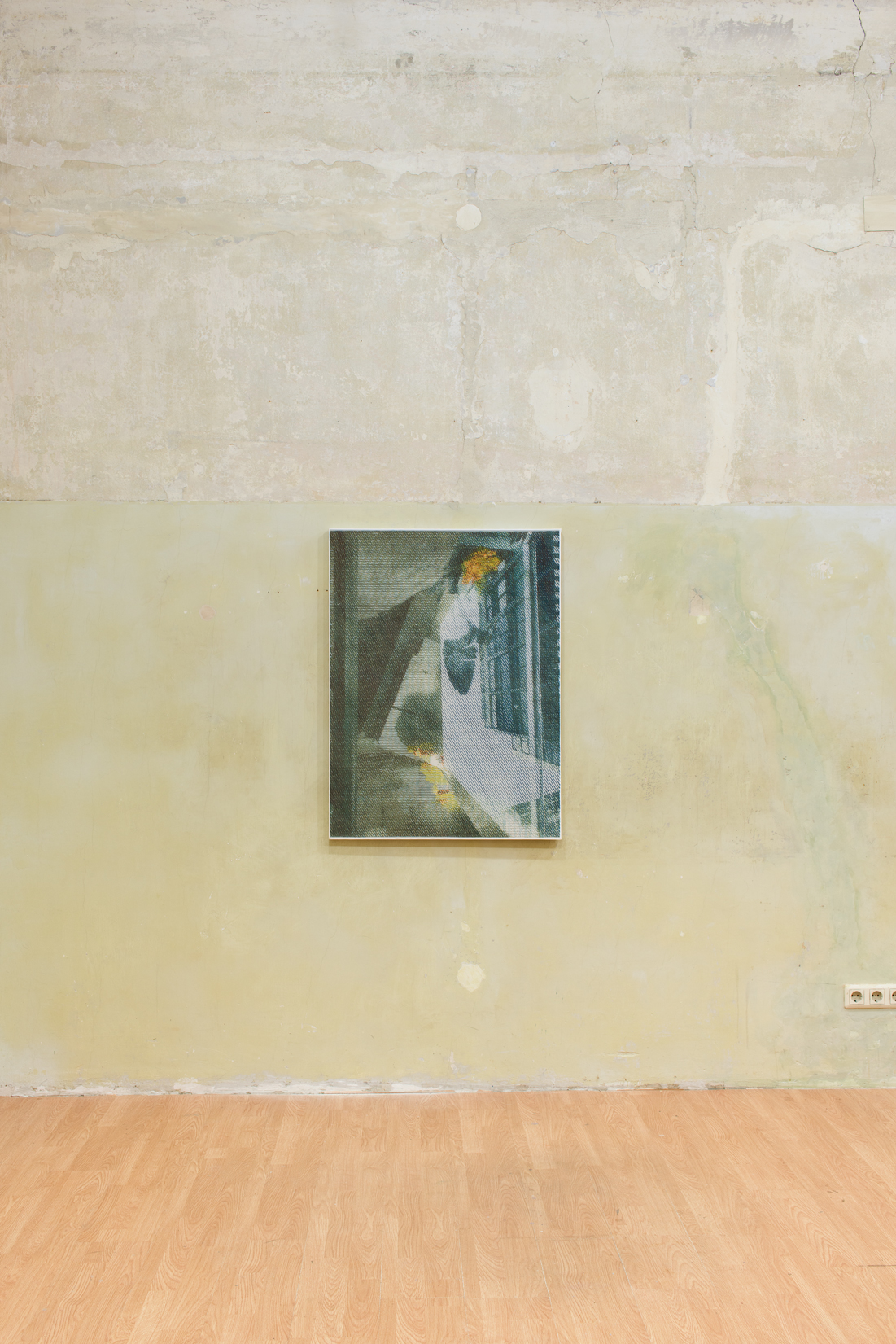
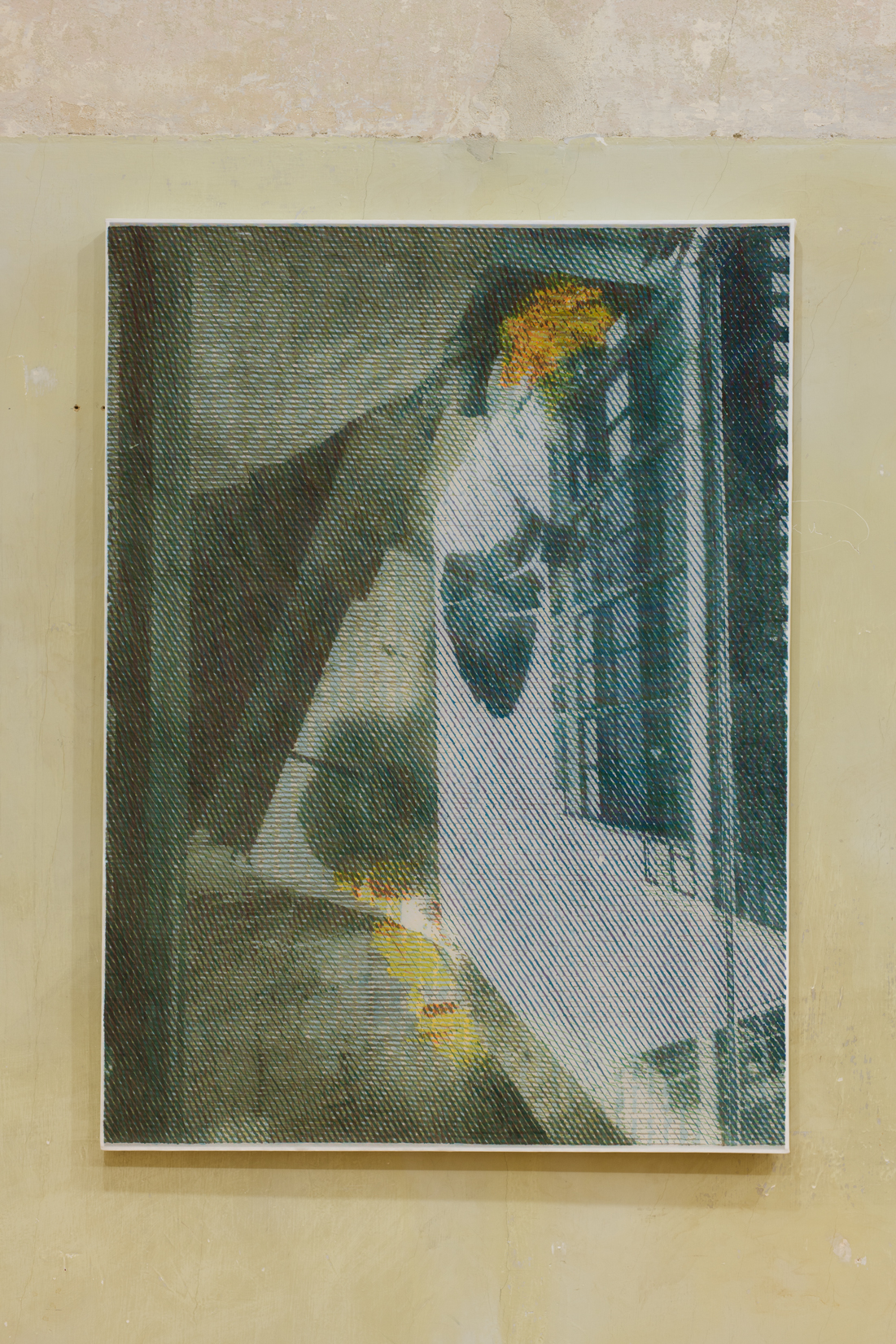
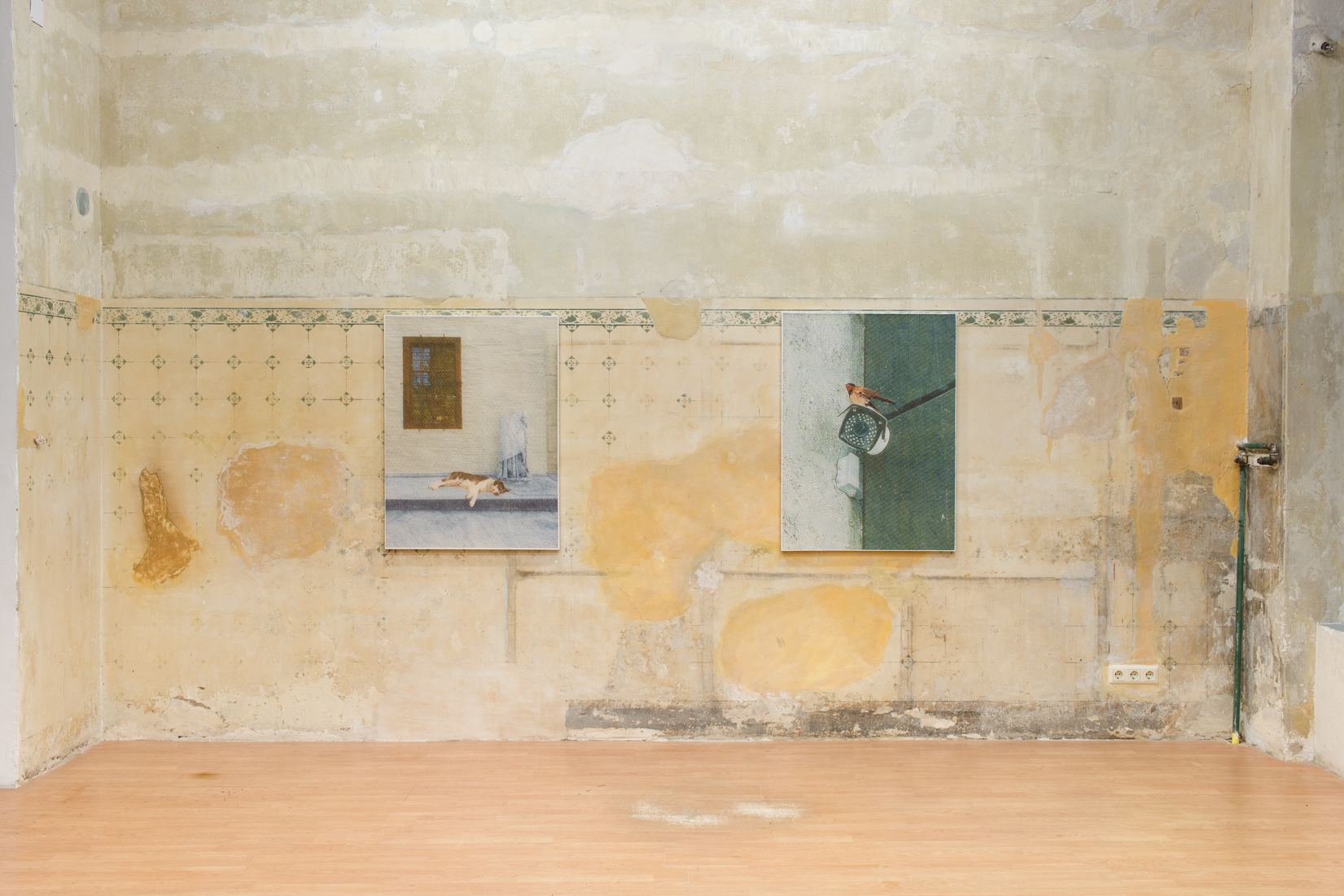
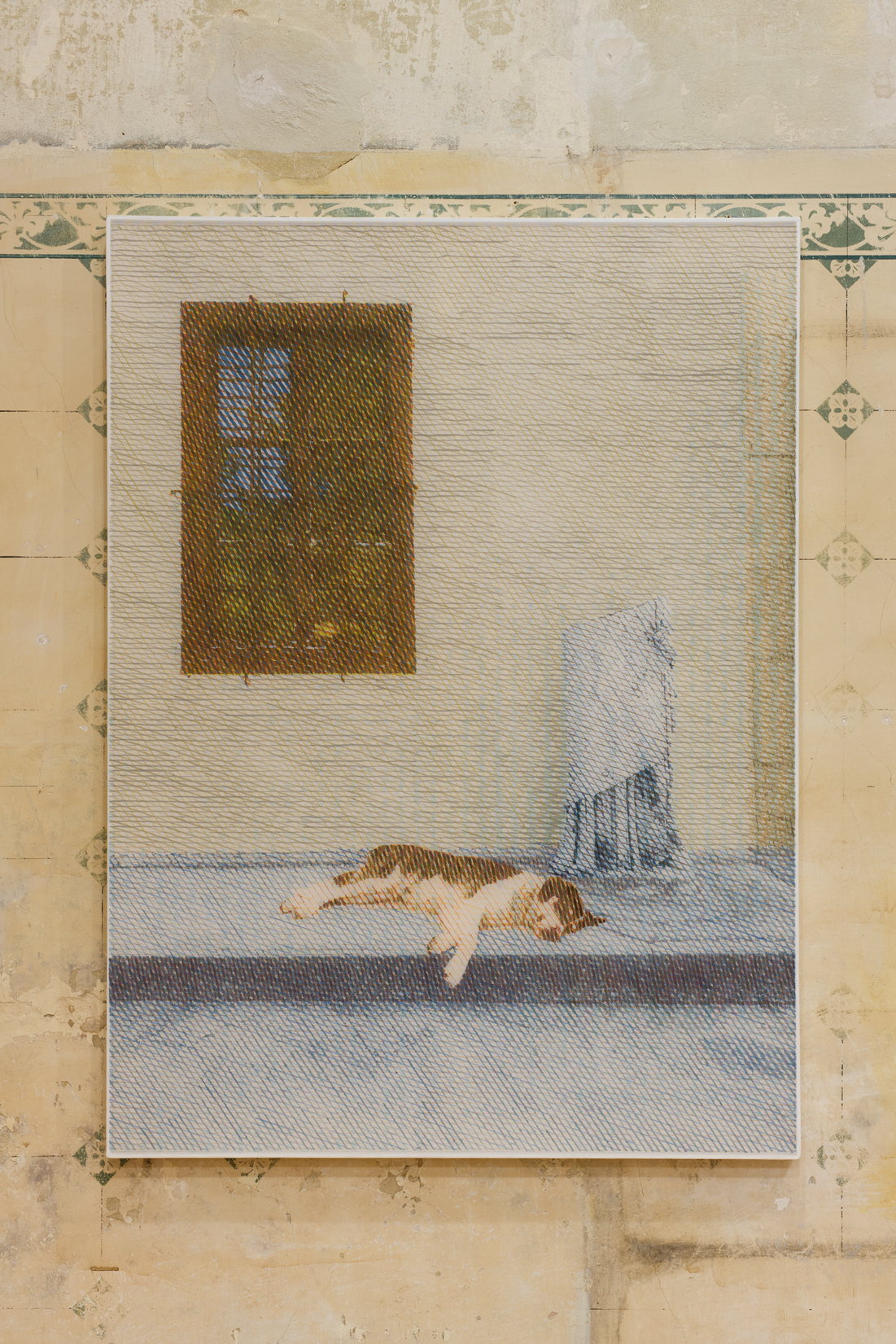
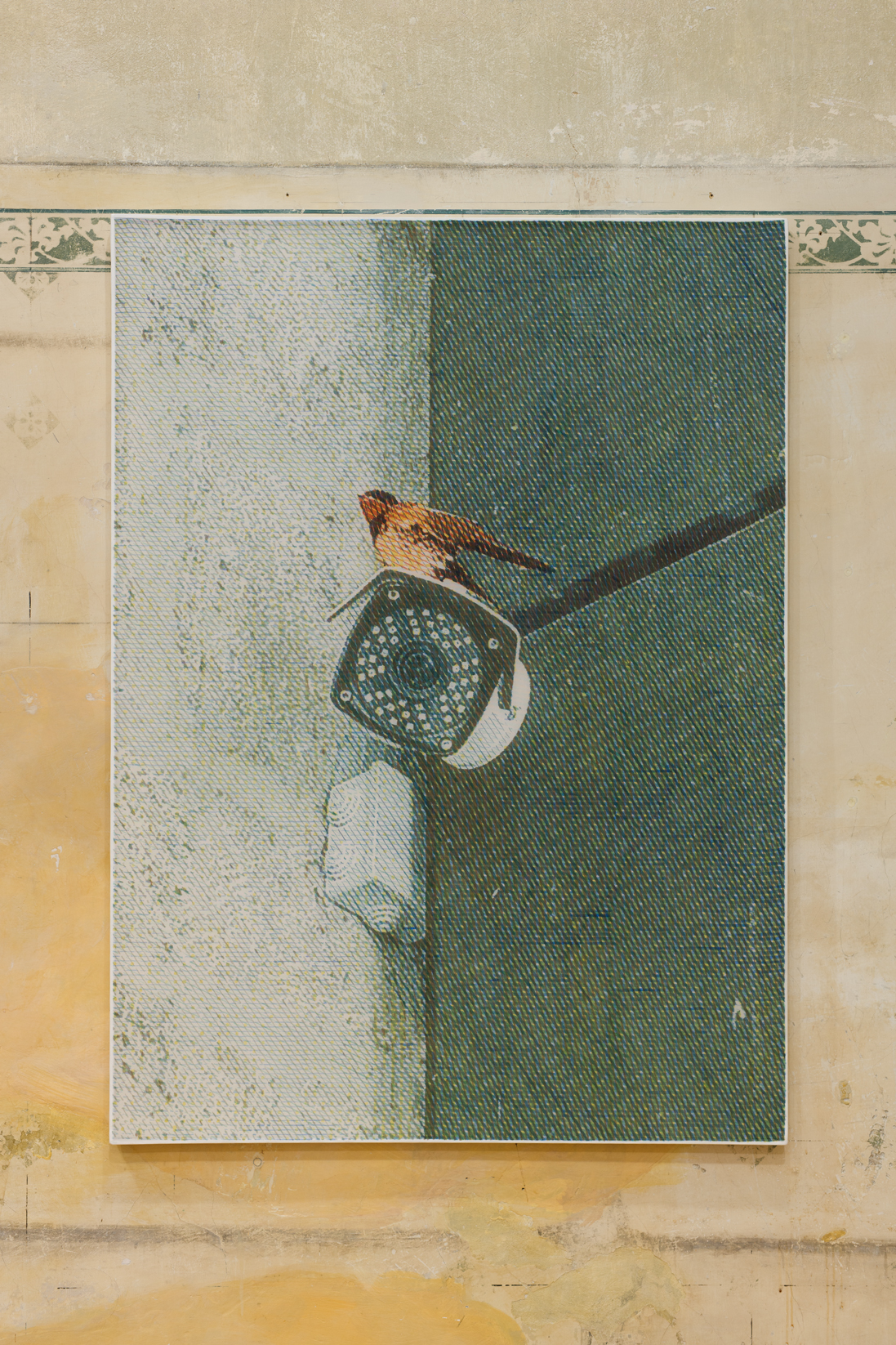
This is an exhibition of new paintings by Yuki Higashino. There are five of them.
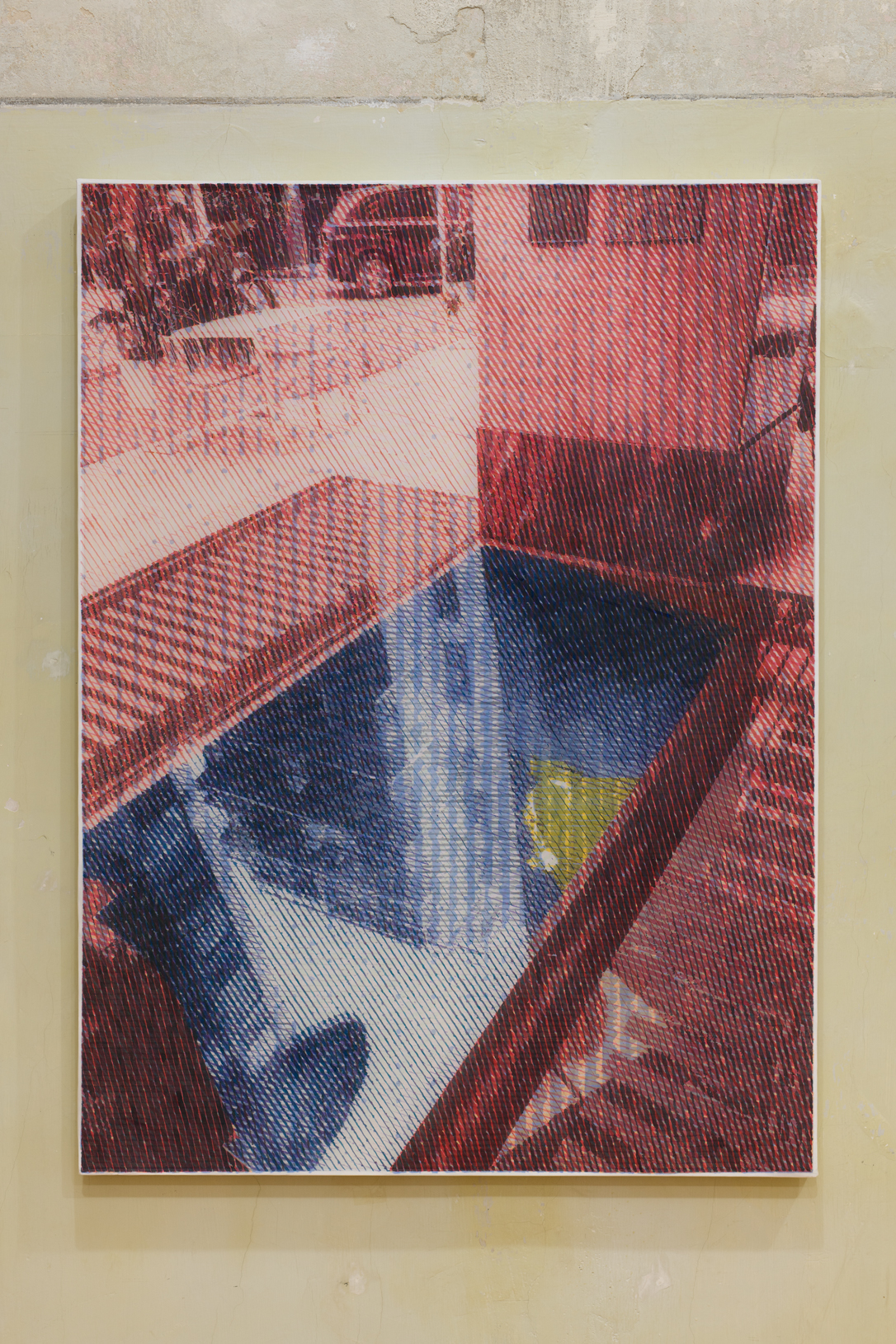
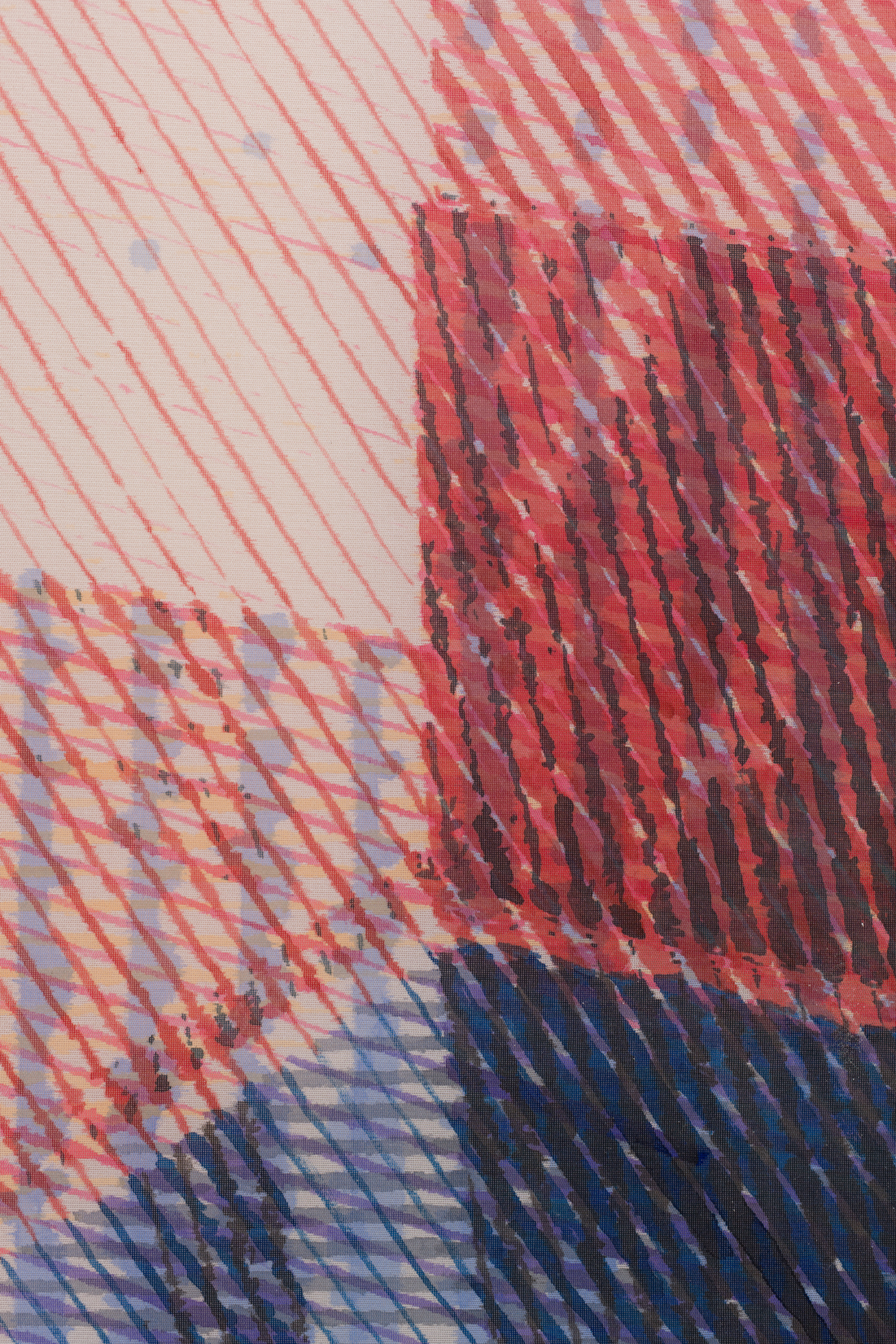
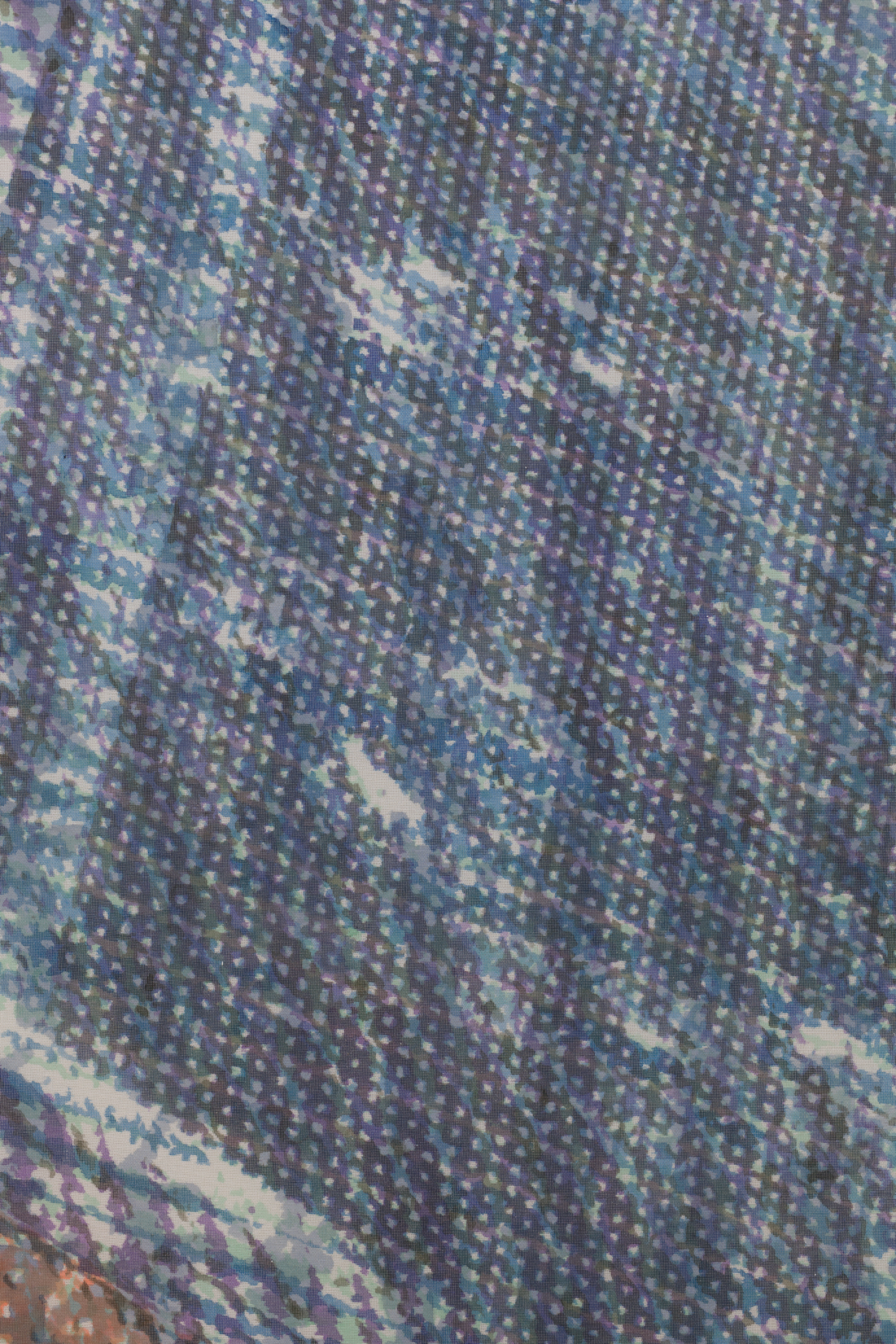
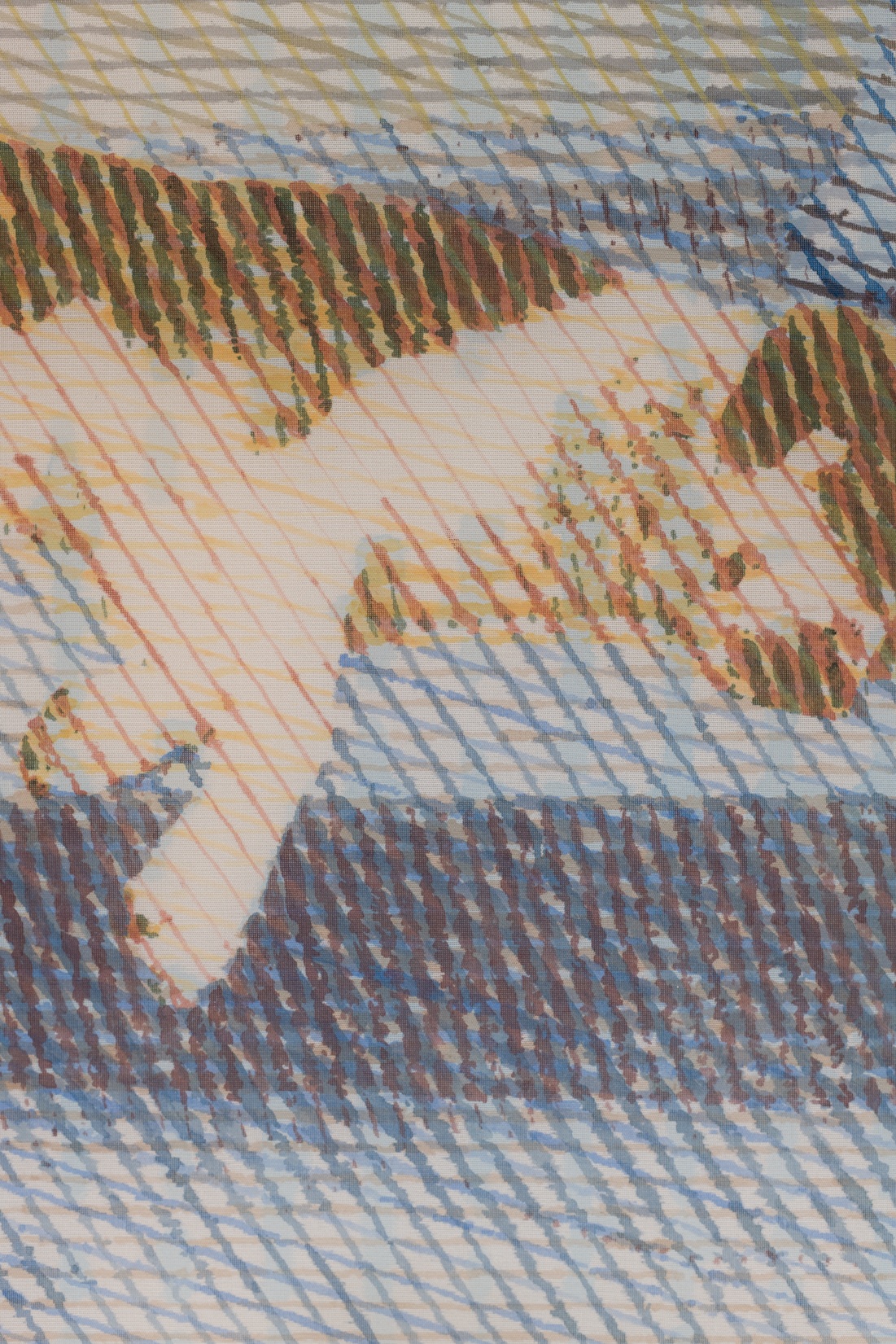
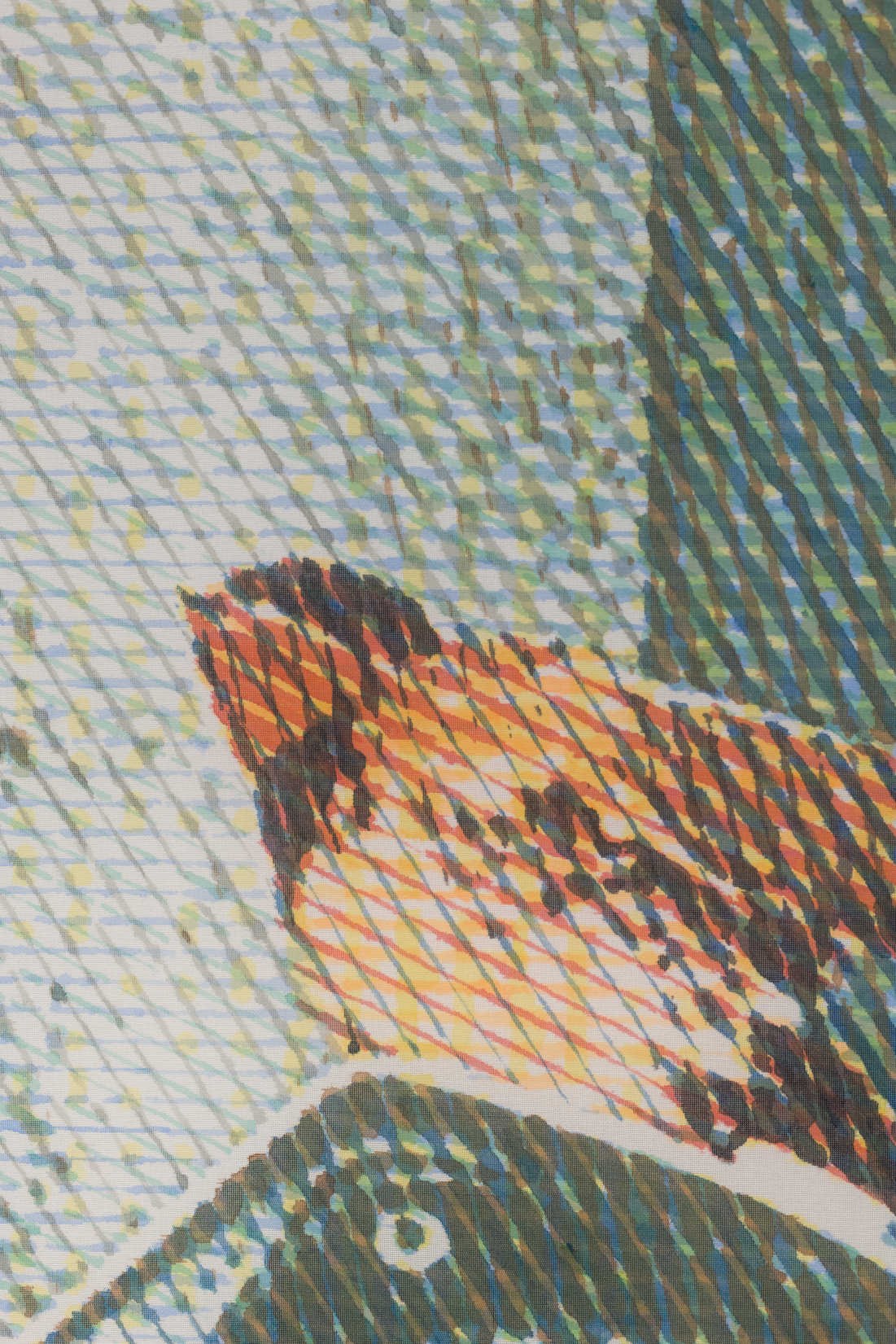
All the paintings are water mixable oil paint on silk. They are based on photographs Higashino took. Each of those pictures was separated into multiple layers in Photoshop, rasterized and printed on paper as abstract patterns consisting of crisscrossing lines and dots. These prints were then used as templates for painting each layer by hand on a sheet of silk, dot by dot and line by line.
The ability of photography to abstract from the world outside is interesting. Three of the paintings are views of a sidewalk. The pavement was covered by glass, and underneath it was an archeological dig. Surrounding buildings were reflected on the glass, effectively packing 2500 years of architectural history into a single view. When painted, the scenes were further fragmented, broken pieces reassembling themselves on the silk. The other two paintings are based on casual snapshots. They were those photographs that so clearly had pictures in them that simply had to be painted. All the images are from Greece.
The fact that their source images were taken in Greece is not central to these paintings. Not central, but not nothing either. Higashino cannot be free from the history of Central and Northern European painters travelling to the south in search of antiquity, the picturesque and better weather. Like Edward Lear.
The exhibited works have nothing to do with Lear, but he spent a long time in Greece, painted its landscape extensively, and wrote well about the country. So he deserves a mention here. He also started his career as a painter of birds, before he became known for his nonsense poetry, travel writing and landscape painting. As an acknowledgment of his contribution to ornithology a species of parrot was named after him. Here is what Wikipedia says about Lear’s macaw.
Lear’s macaw (Anodorhynchus leari), also known as the indigo macaw, is a large all-blue Brazilian parrot, a member of a large group of neotropical parrots known as macaws. Lear’s macaw is 70–75 cm long and weighs around 950 g. It is coloured almost completely blue, with a yellow patch of skin at the base of the heavy, black bill. It inhabits a dry desert-like shrubby environment known as caatinga, and roosts and nests in cavities in sandstone cliffs. It mostly feeds on the nuts of the palm species Syagrus coronata, as well as raiding maize from local farmers.
Photo credits: Stefan Lux
Opening hours during the exhibition:
Friday from 5 – 9pm
…or by appointment!
Contact:
Marxergasse 16
A-1030 Wien
email: fox(at)udobohnenberger.com
With the kind support of: